

Digital Wellbeing Award for Cyber Resilience and Internet Safety

Digital Schools Awards Digital Wellbeing Award for Cyber Resilience and Internet Safety:

What is Digital Wellbeing Award and what do schools need to know:

  • Digital Wellbeing Award is a Special Recognition Award for Cyber Resilience and Internet Safety. 
  • This is the first initiative of its kind to be delivered in the UK.
  • Digital Wellbeing Award has been designed to provide education professionals with the resources and support required to help pupils safely navigate the digital world
  • The framework has been developed by Digital Schools Awards in partnership with education agencies and is supported by Scottish Government, Child Protection Unit & Police Scotland in Scotland.
  • Digital Wellbeing Award is open to early years, primary and secondary schools
  • Participation is FREE
  • Schools can apply for Digital Wellbeing Award without going for The Digital Schools Awards or it can be done in conjunction with their application to become a Digital School
  • There are the four steps in the programme:
  • All questions are compulsory; however documentation or evidence may cover many statements.  You are not required to upload evidence for every statement.  All evidence will be reviewed prior to the validation visit.
  • Schools can register online at  www.digitalschoolsawards.com/register. If your school is already registered simply log-in, go to the My Self Evaluation Menu and select Digital Wellbeing Award from the drop-down menu.
  • Email info@digitalschoolsawards.com for help/further information

How to apply for the Digital Wellbeing Award

Digital Wellbeing Award Scotland Evidence Checklist

This Evidence Checklist is a suggested guide for nurseries/schools in selecting examples where their policies, practices and other activities meet the requirements of each criteria. 

The Award does not specify the number of pieces of evidence needed to meet the requirements of each criteria but rather that the evidence they provide is representative of the overall experience of students and teachers.
About Digital Wellbeing Framework

Digital Wellbeing - a Cyber Resilience and Internet Safety framework for Scotland

Digital wellbeing is the impact of using digital technology on children and young people’s social, emotional wellbeing.

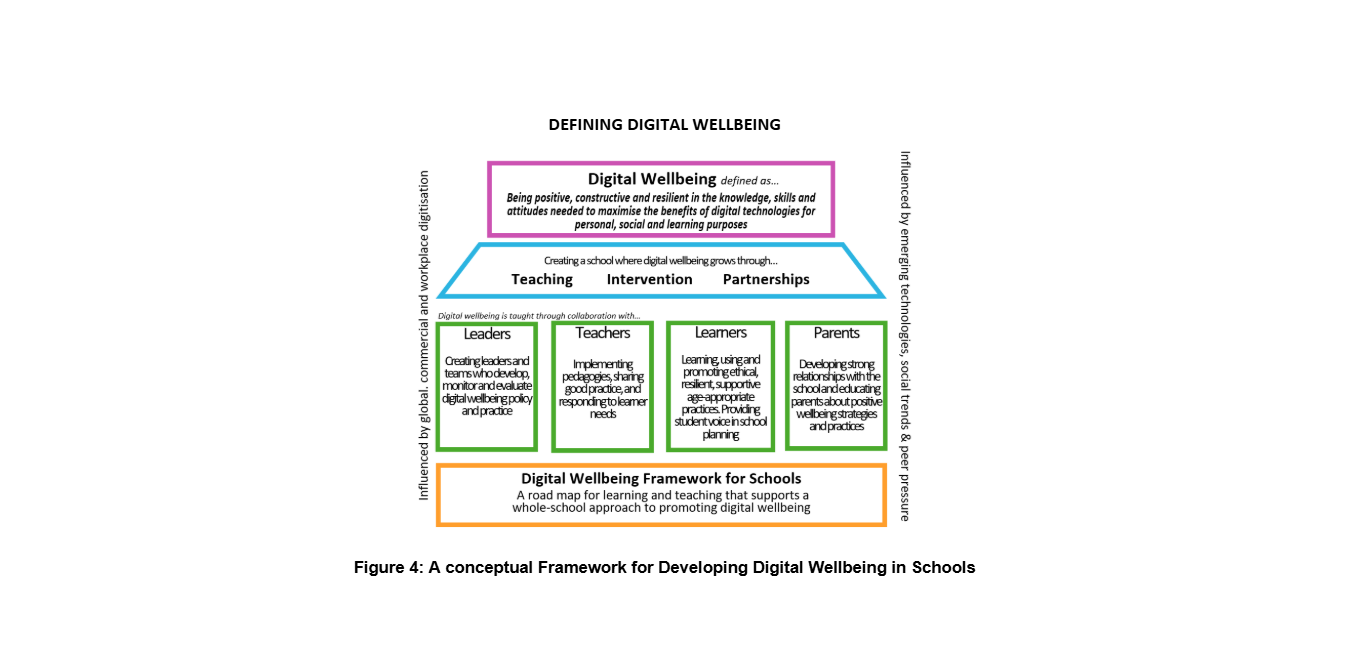
This framework has drawn together national and European perspectives and distilled them into a whole-school road map for promoting students’ digital wellbeing through strong Cyber Resilience and Internet Safety practices.  In the immediate and long-term future, schools, face increasing demands to include digital wellbeing as part of the way they use digital technologies for learning and teaching.  The challenge is not only to ensure children’s digital wellbeing but to establish processes and strategies that will allow students to develop the skills, knowledge and attributes to secure, manage and protect their own wellbeing. This important challenge underpins the Digital Schools Award’s ethos, which is to assist schools to develop, nurture and sustain resilient and positive digital practices in learning and teaching as well as alleviate its risks and threats.

Why is cyber resilience and internet safety so important?

We are spending an increasing amount of time learning, playing and socialising in online environments. In 2025, over 95 % of children aged 8–14 in the UK used the internet regularly, including via services such as YouTube and Google Search (Ofcom).
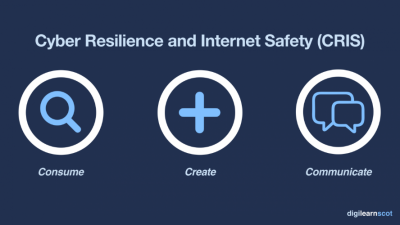
Our online behaviours fall into three categories, we:

  • consume
  • create 
  • communicate

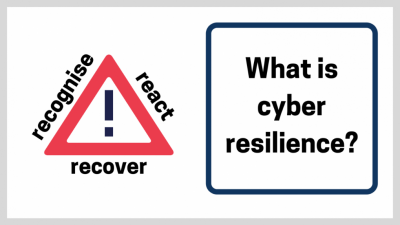
To support our children and young people navigate this part of their lives, we need to be able to support them to recognise, react to, and recover from online harms. At the same time, we need to promote safer, smarted and kinder ways of playing, learning and socialising online.

Defining Cyber Resilience and Internet Safety

The Scottish Government states that “Cyber resilience is not just about responding to threats. It’s about building strength, confidence and continuity into every part of an organisation. It is not only about technology, but also about people: their awareness, skills and ability to respond effectively when things go wrong.” (Introduction – Cyber Resilient Scotland 2025 to 2030: strategic framework – gov.scot)

Features of cyber resilience include:

  • Young people and staff recognise and manage cyber risks

  • Schools and organisations can respond effectively to cyber incidents

  • Digital learning and public services are safe and resilient

  • Education settings manage their cyber risks confidently

  • Scotland supports skilled young people entering cyber security

(From Cyber Resilient Scotland 2025–2030 Strategic Framework. Cyber Resilient Scotland 2025 to 2030: strategic framework – gov.scot)

“We continue to work cooperatively in Scotland with a wide range of statutory and third‑sector organisations to promote positive behaviours online to our children and young people, and ensure they are equipped with the knowledge to stay safe and act when they encounter harm.”
(Online safety – call for action: Ministerial letter – gov.scot)


This is defined within these outcomes:

  • Understanding age‑appropriate online opportunities and risks
  • Recognising and responding safely to cyber risks or harmful content
  • Knowing where to seek help and support online
  • Developing resilience, confidence, and positive digital habits
  • Having a voice in shaping safe online environments

The Framework Explained  

Digital Wellbeing  

For the purposes of the DSA award programme for schools and for the development of the framework, we draw together the many perspectives on digital wellbeing and define it as:  

Being positive, constructive and resilient in the knowledge, skills and attitudes needed to maximise the benefits of digital technologies for personal, social and learning purposes

Digital wellbeing, therefore, could be said to have the following elements:   

  1. A range of skills and competences in using digital technologies appropriate to the person’s age and maturity;  
  2. An understanding of the strengths of digital technologies to enhance learning and relationships;  
  3. A set of attitudes, skills, values and knowledge that create awareness of issues of personal health and wellbeing as well as that of others; 
  4. Resilience in overcoming online events that have the potential to undermine wellbeing;   
  5. Behaviours which display an ethical and constructive approach to others;  
  6. An understanding of the presence of their online footprint and how organisations and systems use a person’s data;  
  7. A strong sense of digital citizenship and personal responsibility to foster and promote ethical use of digital technologies.  
  8. Willingness to engage in open dialogue about digital wellbeing. 

“Tools and rules are no replacement for open dialogue. They can only ever be part of the solution” (Phippen, 2019)

Phippen, A., (2019), Young People, Internet use and wellbeing technology in the home, Southwest Grid for Learning, https://swgfl.org.uk/assets/documents/technology-in-the-home-1.pdf